
The glue that has been missing to keep people contributing of their time has been money. If it hadn’t been for the example of pertinacity that my car wreck and subsequent rehabilitation taught me, I would’ve thought it was a great idea and just let it fizzle away after a few years as well. Overcoming the helplessness caused by a two month coma, clinical death and right side paralysis didn’t happen overnight, in a few days or a few weeks, even a few years. It took well over a decade before people stopped wondering what was wrong with me. It took almost 2 decades before people started seeing me as one of the healthier people they know.
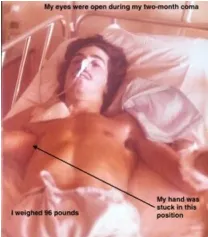
From the days when my every move was fraught with tremor and uncertainty as I drooled on myself and couldn’t put on a pair of socks, tie my shoes, fasten buttons, or be trusted to feed myself with a fork, I had a virtual mountain of nonstop challenge between myself and the person I wanted to be. As my long torturous rehabilitation progressed, like a toddler and then a young child, I had to learn how to go to the bathroom by myself, step over curbs, open doors with a key, sign my own name (on checks since that was how most people used to buy things) and for my stuttering to be heard above a whisper.
While people seemed happy to accept me in a wheelchair, I could not accept myself in that way. All the many self-improvement books that I surrounded myself with convinced me that if I kept making little improvements every day there would be the large reward of optimal health at the end. Unbeknownst to me, the road to such wellness, a road that has no end, was a very, very long one.
As the unending road that it is, it taught me that to reach any goal, one must be consistent and work towards its attainment each and every day. And that is the approach I have taken with the National Bicycle Greenway. As volunteers come and go, I just keep working it. It is for that reason that the story of the NBG is really the story of Martin Krieg as embarrassing as that is to say.. The above said, here is the story I run at BikeRoute.com.
I am Martin Krieg, a business school graduate of Cal State University Hayward and former accountant. I have crossed the country twice on a bicycle after first rehabilitating myself from paralysis, clinical death and a seven week coma as a result of a car wreck.
 In 1979, I rode across America on a standard upright bicycle. On my second trip across America in 1986 I rode a recumbent bike and organized media events, public speaking and fund raising for the National Head Injury Foundation. That ride reached 40 million people amongst my newspaper, public speaking and TV and radio appearances. Upon its completion, to spread the word for the interconnected network of safe bikeable roads and paths called the National Bicycle Greenway (NBG) (which became a nonprofit in 1993) I foresaw after my ride ended in Boston, from 1987 to 1994, I published 60,000 Cycle America Regional Directories in four different parts of California.
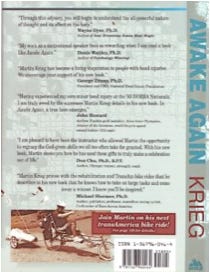 Then, in 1994, WRS Publishing published the book I had written and rewritten for 14 years. Called Awake Again (the book is highly regarded as a story and as a literary work, of which there are many testimonials – here are a few – sample or buy the E-Book HERE), it shows how I turned my long rehabilitation and subsequent bike rides, into the same game I am playing now to make the NBG real.
For the next five years, I alternated between traveling the country to promote my book and learning the excitement of the all new World Wide Web as I built the first web sites for well over a hundred small and large bike companies. In 1997, I began a campaign to send hundreds of cyclists to Washington, DC. It started in Santa Cruz, CA with two Swing for NBG events and a Lighthouse Party send off.


All of which ended in the Nation’s Capitol with a widely known bike celebration called Cycle America 2000. We brought that excitement back to the West Coast with two huge cross country relay rides both of which ended in the Surf City with enormous Festivals in 2002 and in 2003. During this time, I also personally inspired, coached and consulted on over a dozen other successful transcontinental bikes rides.
From Palo Alto, CA, starting in 2003, we began producing the annual National Mayors’ Ride (epic Boston to SF video) and I began the Mountain Movers Podcast series. In addition, I also finished How to Bike America and began working on a business plan for the NBG as well as what would amount to the sequel for “Awake Again’ called “How America can Bike and Grow Rich, The National Bicycle Greenway Manifesto”.
I took the 2007 Mayors’ Ride season off to devise a fully interactive Google mapping system that runs like a game while building community to let users calculate, request, plan, utilize, store, display and vote on bike routes. Complications with my internet service provider in 2009, however, forced me to regroup after the scores of on-line maps users had placed at BikeRoute.com vanished. Testimonials and more info about this mapping API.
NBG Accomplishments
1987-2013
Martin Krieg’s
National Bicycle Greenway
Media Journey
1986-2012

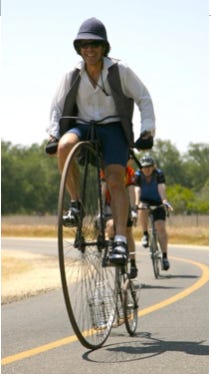
By the time I discovered that my ISP was not going to be able to deliver the mapping product my small team and I had devised, and Google then introduced bike mapping, I was too far along with the TransAm ride I was building to promote our new maps – I was unable to turn around. In the summer of 2009, then, with the economy crashing all around me as a plethora of sponsorships I had worked to develop all dried up, I did a scaled down version in which I only rode 1000 miles before I had to end the ride. In what now amounts to a test run because of all the unprecedented, horrific weather, I rode the Eagle HiWheel, the only one like it in active use in the world, from San Francisco to Salt Lake City.

In 2010, my next attempt to cross the USA on the amazing Eagle was put on hold by a car that turned left in front of me.
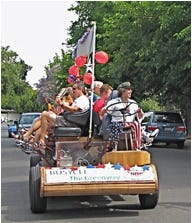
After a 16-month foray into the world of internal combustion (I remained Car-Free) looking for ways to get the 15-person Busycle towed across America as part of my ride (this difficult period is explained in “The Oil in our Food and Everything Else”) – I married an Irish woman, and went to Ireland where we had a boy named Cayo. From there, I staged the 2011, 2013 and 2014 Mayors’ Rides, met with the president of Ireland and finished my book, “How America Can Bike and Grow Rich, the National Bicycle Greenway in Action“.

Here I am with outgoing Dublin, IRL Mayor, Andrew Montague and Councilor Ciarán Cuffe, a fellow TransAm cycling vet who, along with Andrew, read and much enjoyed my book, “Awake Again, all the Way Back from Head Injury“. When I interviewed Andrew, he was arguably the most powerful, results getting activist in the world per this podcast. HERE is the Tour of Dublin I did on the HiWheel Eagle with Andrew and Ciaran
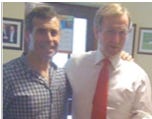
With Enda Kenny, outgoing Prime Minister/Taoiseach (president) Ireland. Enda was very pro-bike.
In 2014, the Google mapping platform matured enough for us to be able to apply the decade of Mayors’ Ride research our NBG Scouts had supplied to create the coast-to-coast route that will, in time, give way to the perfect world National Bicycle Greenway we have long foreseen.
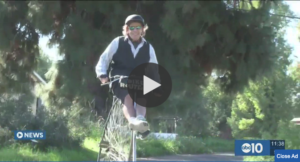
In May 2015, I returned to America for our CA Mayors’ Rides and landed in Davis, CA. After half a year of learning the local lay of the land in this small city of 65,000 people (when you don’t include its 30,000 students), I spent the cold of winter finishing the book, “How to Move Mountains with Love and How Love Can Revitalize You, Our Communities, Nation and the World with the National Bicycle Greenway”, I had begun in 1994. With that complete I was then able to turn my attention to establishing Davis as one of the 20 NBG Anchor cities that connect San Francisco to Washington, DC. While in Davis, Sinead Santich, made me one of the stars in this excellent UC Davis sponsored VIDEO about the two-wheel way of life.
In the Fall of 2017, I moved to Indianapolis, the Greenway Capital of America, FOR THIS REASON – where I wrote: “How Indianapolis Built America, and, How it will rebuild it with the National Bicycle Greenway”. Besides immersing myself in the amazing history of this city as I wrote this book, I also created this 5-minute video Virtual Tour of the Indianapolis Cultural Trail. HERE, also, is the podcast I did with its amazing CEO, Karen Haley!
Here is our plan:

Follow my Progress
at Substack
Here are the Bike books I have written-


Pre-Internet and pre-sophisticated mapping tools we had not allowed for the desolate reality of this country’s actual geography. Now we can quantify it. Now we know that. fully 47% of America is uninhabited. and only 3.6% of the contiguous U.S. is urbanized.
After leaving San Francisco on the Eagle, it took me riding from Reno to Salt Lake City for me to see how pervasive America’s uninhabited lands really are – well over half of this country is unpopulated and desolate. Even though I had seen much of this with my own two eyes on my Trans Am bike rides and during my 2009 HiWheel ride I never really understood how much of the USA these lands represented until I saw the USA map here.

On it the areas marked in green are uninhabited.
There are 1.78 million sq. miles where no one lives in America. These lands are made up of large wilderness areas, filled with uninhabitable mountains, endless deserts and off-limits nature reserves. There are also endless miles of farmland and military installations, etc.
The above said, much good work has been done in most population centers for the riders of bikes over the last few decades. Enough so that the long distance cyclist can safely get across our Anchor Cities when traveling from one coast to the other.
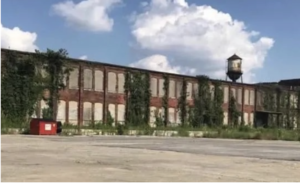 Our first project will be to begin retro fitting the first of our 20 NBG Hubs (explained), in the Indianapolis National Motor Vehicle factory, exp
lained HERE.
Once we build a large enough staff, there is a big gap in Nevada an Utah that needs to be addressed. It became obvious to me in in 2009.
While I had biked across twice before, using the northern and the southern routes of less people and less reminders of them, the abject nothingness of my 2009 route showed me the 500+ miles between Reno and Salt Lake City are an impediment to Coast to Coast cycling
As such then, riding San Francisco to Salt Lake City on the route my group and I have long prescribed changed everything. Doing the ride solo, it became a test of my character similar in many ways to my head injury rehabilitation. It is so unappealing in fact, that most Trans Am cyclists take a detour to or from the West Coast that begins 600 miles north of San Francisco.
Reasoning it does not have to be that way, I thought that this was where some of the features of our original Greenway plan could be built. It is out there that I feel the lifeless miles of virtual nothingness in between Reno and Salt Lake City can be turned into a bicycle playground.
In Nevada, on I80, the small towns of Fernley, Lovelock, Winnemucca, Battle Mountain, Carlin, Elko, Wells and West Wendover which are 60 to 70 miles apart, break up the sameness of scenery of nonstop sage brush.
While in Utah, headed towards Salt Lake City, 95 miles from it, there is something to be seen, the 87 foot tall Tree of Utah. Here as I80 runs through the Bonneville Salt Flats, the tree features a trunk of concrete spheres covered in native Utah rocks and minerals.
Here, as well in the middle of the two directions of I80 travel, are the tracks of an abandoned rail line. Perfect for a bicycle travel way!
The I80 stretch from west of the Great Salt Lake to Sacramento, is the general route of the 19th century California Trail that left the Oregon Trail in Wyoming to send prospectors and settlers to the Golden State.
In Nevada, on I80, the two directions of Travel are separated by a generous 60 foot wide median through most of the state. Here is where we can build a pedaling paradise.
A bike path, 15 feet wide could be festooned with shade trees, shrubbery, info kiosks, even small lawns, There can be rest stops every 10 miles complete with water fountains and restrooms. Besides rehydrating themselves, long distance, cyclists can also procure energy bars and emergency supplies at our NBG vending machines.
For those riding long distance making the median available to them on this high-speed stretch of roadway, where there is extremely limited shade, food, water or shelter, it is this linear park and its NBG Rest Stops that will offer enough relief to make this harsh piece of geography negotiable for a greater number of bike riding fitness levels.
Every 20 miles there will be a parking lot interstate travelers can use to access the Greenway
In time, as our cyclists continue to bring life to these desolate lands, along the way, we foresee camp sites and overnight accommodation in the middle of a desert that just needed some TLC.
The way it is configured now, for those cyclists who chose the less challenging climbing of I-80 there is, however, an added cost,. Once they reach Wendover at the state line they must cross the fully barren Salt Lake Basin that stands between them and Lake Pointe, 30 miles before Salt Lake City.
“Probably the most difficult ride I’ve ever done, 101 miles between water, food and shade, Here is my report
It is not how many time you get knocked down that count
but how many times you get back up.
George Armstrong Custer